Maxi Obexer (trans. Neil Blackadder), “The Daughters of Oresteia” Dramatic Reading (English)
Maxi Obexer and Neil Blackadder, Co-sponsored by the Center for German and European Studies (CGES) and the Department of German, Nordic, and Slavic+.
332 Pyle Center
First performed in 458 BCE, Aeschylus’ The Oresteia is traditionally viewed as the depiction of a society transitioning from chaotic blood vengeance to structured, democratic justice. Yet this foundational drama of democracy also marks the birth of the tragic hero: Orestes, who slays his mother as commanded, only to be consumed by remorse.
Maxi Obexer shifts the lens to the women – the daughters, the sisters, the mothers. Powerful and strong figures like Iphigenia, Cassandra, Clytemnestra, Electra and Athena were either killed, discarded after serving their dramatic purpose, unacknowledged and ignored, or distorted by male, ultimately false narratives. Their stories – and their relationships with one another – were scarcely, or only obliquely, explored. Obexer now allows them to question why their stories are denied tragic status and to ask whether this moment truly birthed democracy – or merely consolidated patriarchy with their labor, but without their consent. Demanding a review of the verdict and a retrial to prevent setting a dangerous precedent, these heroines challenge the foundations of a Western myth. And how better to foresee the next 3,000 years than Cassandra?
Join playwright Maxi Obexer and English translator Neil Blackadder for a dramatic reading of key scenes performed by graduate students from the Department of Theater and Drama, followed by a Q & A.
Quotes from the Play
Clytemnestra: “’Democracy reigns!’ shout the men as they brawl through the streets. The women retreat into their homes.”
Electra: “I want out of these borrowed quotes, out of this old, male-centered history.”
Iphigenia: “There’s still room for improvement here when it comes to democracy – and room to slip even lower.”
Athena: “To whoever claims democracy is a bland affair: I disagree.”
Clytemnestra: “Is it written across my forehead? ‘Guilty of everything, Mother?’” For more information in German, see: https://m-obexer.de/die-toechter-der-orestie/.
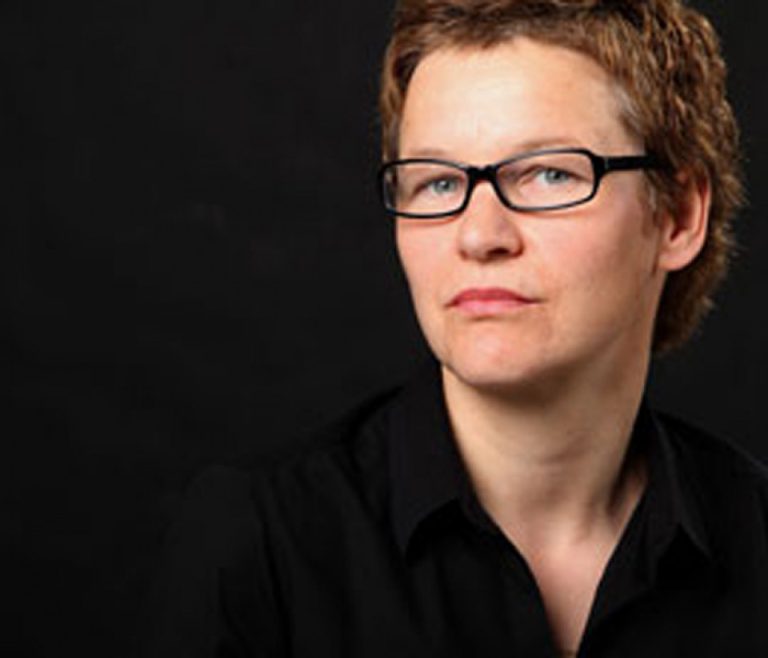
About the author: Maxi Obexer is a prominent German-language author and playwright whose work examines language, power, and political imagination. Raised in South Tyrol and thus in fact in Italy, and based in Berlin, she has earned numerous accolades, including the Robert-Geisendörfer-Prize, the Eurodram Prize, the Alice Salomon Poetics Prize, and a Bachmann Prize nomination. Her fundamentally feminist writing addresses issues of migration, European identity, feminist politics, and non-human subjecthood. Co-founder of the New Institute for Dramatic Writing and former interim co-president of PEN Center Germany, Obexer has taught at Dartmouth College, Georgetown University, the University of Arts (Universität der Künste) Berlin, and the Literaturinstitut Leipzig. We are honored to have her at UW–Madison as Max Kade Writer in Residence in the fall of 2026.
About the translator: A native of the Lake District area in England, Neil Blackadder is a translator of drama and short fiction, and Professor Emeritus of Theatre at Knox College (1998–2019). He holds a PhD in Comparative Literature and was certified by the American Translator’s Association in 2004. Recipients of NEA (National Endowment of the Arts), PEN, and Howard Foundation grants, his translations include works not only by Maxi Obexer, but also Lukas Bärfuss, Ewald Palmetshofer, and Anne Weber. Blackadder has held residencies at Banff and Princeton, authored Performing Opposition: Modern Theater and the Scandalized Audience (2003), and directed over 15 productions at Knox. Based for years in Chicago before he moved to upstate New York a few years ago, Blackadder serves as Translations Editor for Another Chicago Magazine and is a co-founding member of the Theatre in Translation Network. His short play, Dad’s Guns, was adapted into a 2022 film.