Courses
Department of German, Nordic, and Slavic+ Course Information
The Department of German, Nordic, and Slavic+ offers a range of courses. We teach more than a dozens languages, including Czech, Danish, Dutch, Finnish, German, Icelandic, Kazakh, Norwegian, Old Norse, Polish, Russian, Sami, Serbo-Croatian, Swedish, Turkish, and Yiddish. Our courses explore cultures and literature from across the globe, from Iceland to Germany to Russia to Turkey. Study with GNS+ and see the world.
- Questions regarding Undergraduate Courses can be directed to Joanna Schuth.
- Questions regarding Graduate Courses can be directed to Mark Mears.

For the most up-to-date listings of courses offered by German, Nordic, and Slavic+ please see the UW Course Guide under the subject headings GERMAN, SCAND ST, SLAVIC, GNS, FOLKLORE, and LITTRANS (Literature in Translation).
Department of German, Nordic, and Slavic+ Course Descriptions for Spring 2027:
GNS (includes Turkish, Kazakh, and Yiddish courses) Course Descriptions
German and Dutch Course Descriptions
Scandinavian Studies Course Descriptions
Slavic Course Descriptions
Folklore Course Descriptions
Literature in Translation Course Descriptions
For more information on courses please contact our Undergraduate Advisor Joanna Schuth.
For course descriptions from previous semesters, click on the “Course History” tab.
Fall 2026 GNS+ Courses
For the most up-to-date listings of courses offered by German, Nordic, and Slavic+ please see the UW Course Guide under the subject headings GERMAN, SCAND ST, SLAVIC, GNS, FOLKLORE, and LITTRANS (Literature in Translation).
Department of German, Nordic, and Slavic+ Course Descriptions for Fall 2026:
GNS (includes Turkish and Kazakh courses) Course Descriptions
German and Dutch Course Descriptions
Scandinavian Studies Course Descriptions
Slavic Course Descriptions
Folklore Course Descriptions
Literature in Translation Course Descriptions
For more information on courses please contact our Undergraduate Advisor Joanna Schuth.
For course descriptions from previous semesters, click on the “Course History” tab.
Featured Courses:


Summer 2026 GNS+ Courses
For the most up-to-date listings of courses offered by German, Nordic, and Slavic+ please see the UW Course Guide under the subject headings GERMAN, SCAND ST, SLAVIC, GNS, FOLKLORE, and LITTRANS (Literature in Translation).
Department of German, Nordic, and Slavic+ Course Descriptions for Summer 2026:
German and Dutch Course Descriptions
Scandinavian Studies Course Descriptions
Slavic Course Descriptions
Folklore Course Descriptions
Literature in Translation Course Descriptions
For more information on courses please contact our Undergraduate Advisor Joanna Schuth.
For course descriptions from previous semesters click on the “Course History” tab.
Featured Courses:


Students seeking to enroll in Directed Study courses for German, Scandinavian Studies, Slavic, or GNS must complete a Directed Study Form. Students should complete the form in conversation with the instructor with whom they plan to take the course. In most cases, students will not be authorized to enroll in a Directed Study courses until they have completed and submitted the form to our graduate or undergraduate advisors.
Fall 2025
Summer 2025
Spring 2025
Fall 2024
Summer 2024
Spring 2024
Fall 2023
Spring 2023
Fall 2022
Summer 2022
Spring 2022
Fall 2021
Summer 2021
Spring 2021
Fall 2020
Summer 2020
Spring 2020
Fall 2019
Summer 2019
Spring 2019
Fall 2018 Featured Courses
Summer 2018
Spring 2018
Featured Spring 2018 Classes
Fall 2017
Featured Fall 2017 Classes
Summer 2017
Spring 2017
Featured Courses:
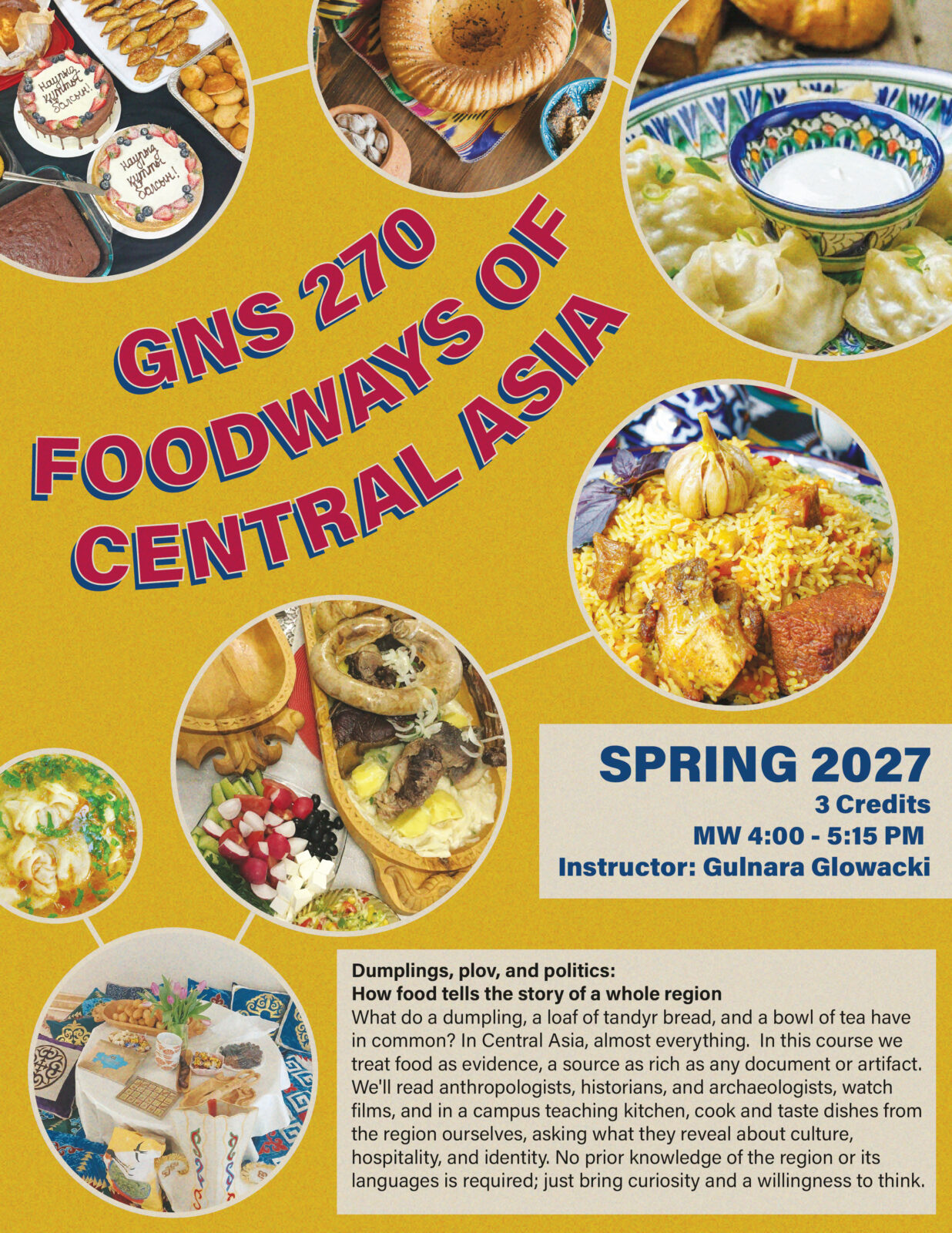
Dumplings, plov, and politics: how food tells the story of a whole region
What do a dumpling, a loaf of tandyr bread, and a bowl of tea have in common? In Central Asia, almost everything.
In this course we treat food as evidence, a source as rich as any document or artifact.
We’ll read anthropologists, historians, and archaeologists, watch films, and in a campus teaching kitchen, cook and taste dishes from the region ourselves, asking what they reveal about culture, hospitality, and identity. No prior knowledge of the region or its languages is required; just bring curiosity and a willingness to think.
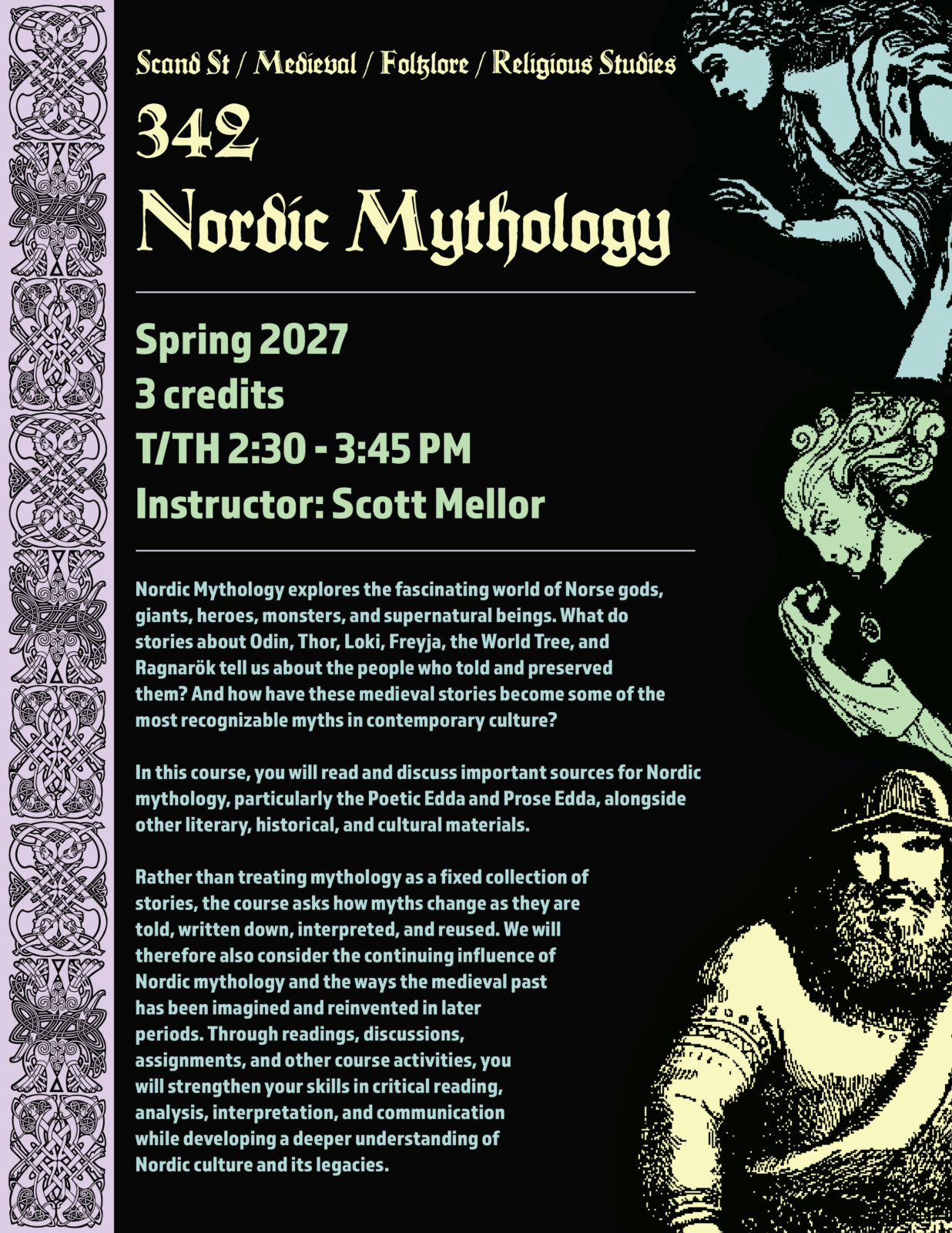
Nordic Mythology explores the fascinating world of Norse gods, giants, heroes, monsters, and supernatural beings. What do stories about Odin, Thor, Loki, Freyja, the World Tree, and Ragnarök tell us about the people who told and preserved them? And how have these medieval stories become some of the most recognizable myths in contemporary culture? In this course, you will read and discuss important sources for Nordic mythology, particularly the Poetic Edda and Prose Edda, alongside other literary, historical, and cultural materials. Rather than treating mythology as a fixed collection of stories, the course asks how myths change as they are told, written down, interpreted, and reused.
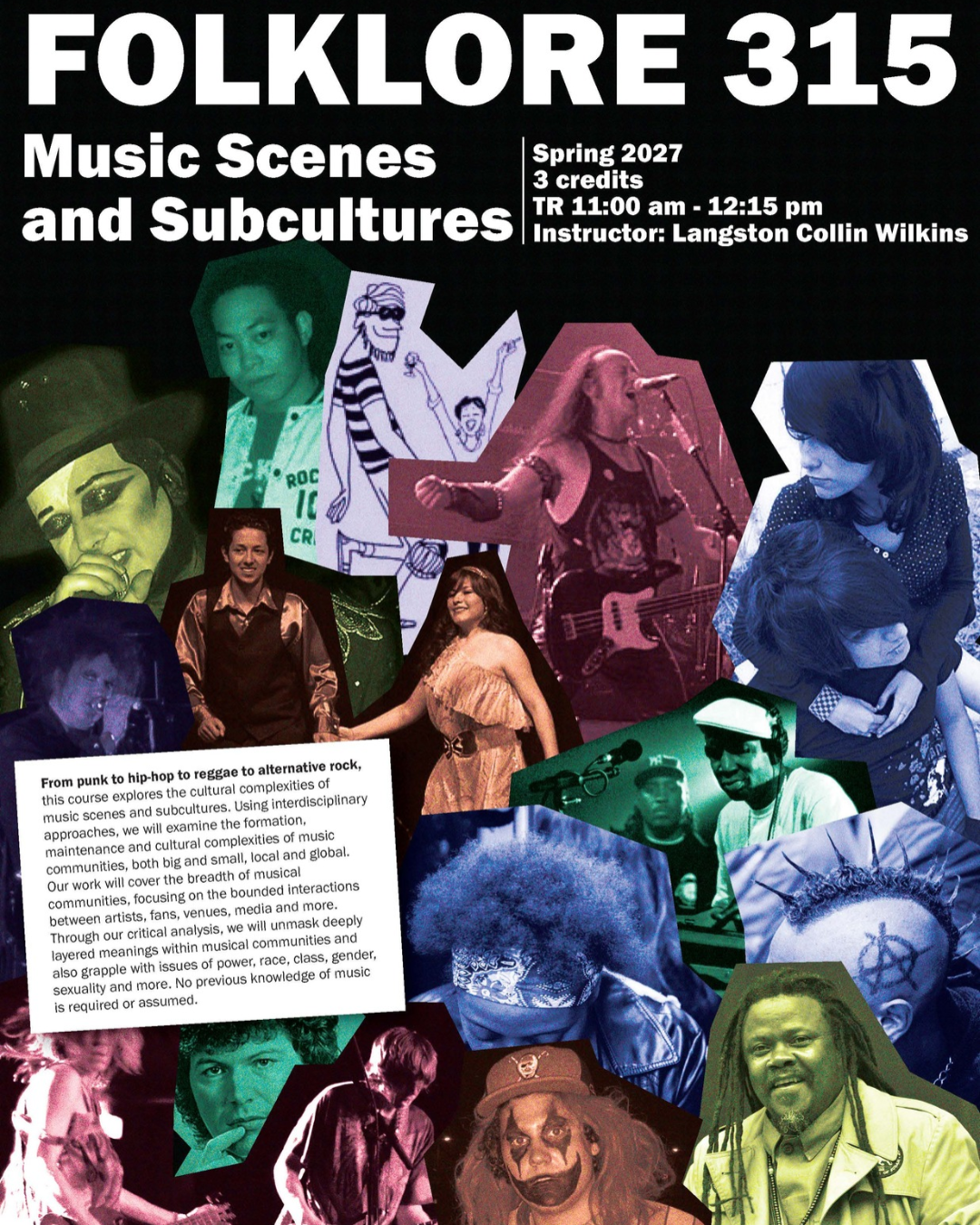
From punk to hip-hop to reggae to alternative rock, this course explores the cultural complexities of music scenes and subcultures. Using interdisciplinary approaches, we will examine the formation, maintenance and cultural complexities of music communities, both big and small, local and global. Our work will cover the breadth of musical communities, focusing on the bounded interactions between artists, fans, venues, media and more. Through our critical analysis, we will unmask deeply layered meanings within musical communities and also grapple with issues of power, race, class, gender, sexuality and more. No previous knowledge of music is required or assumed.
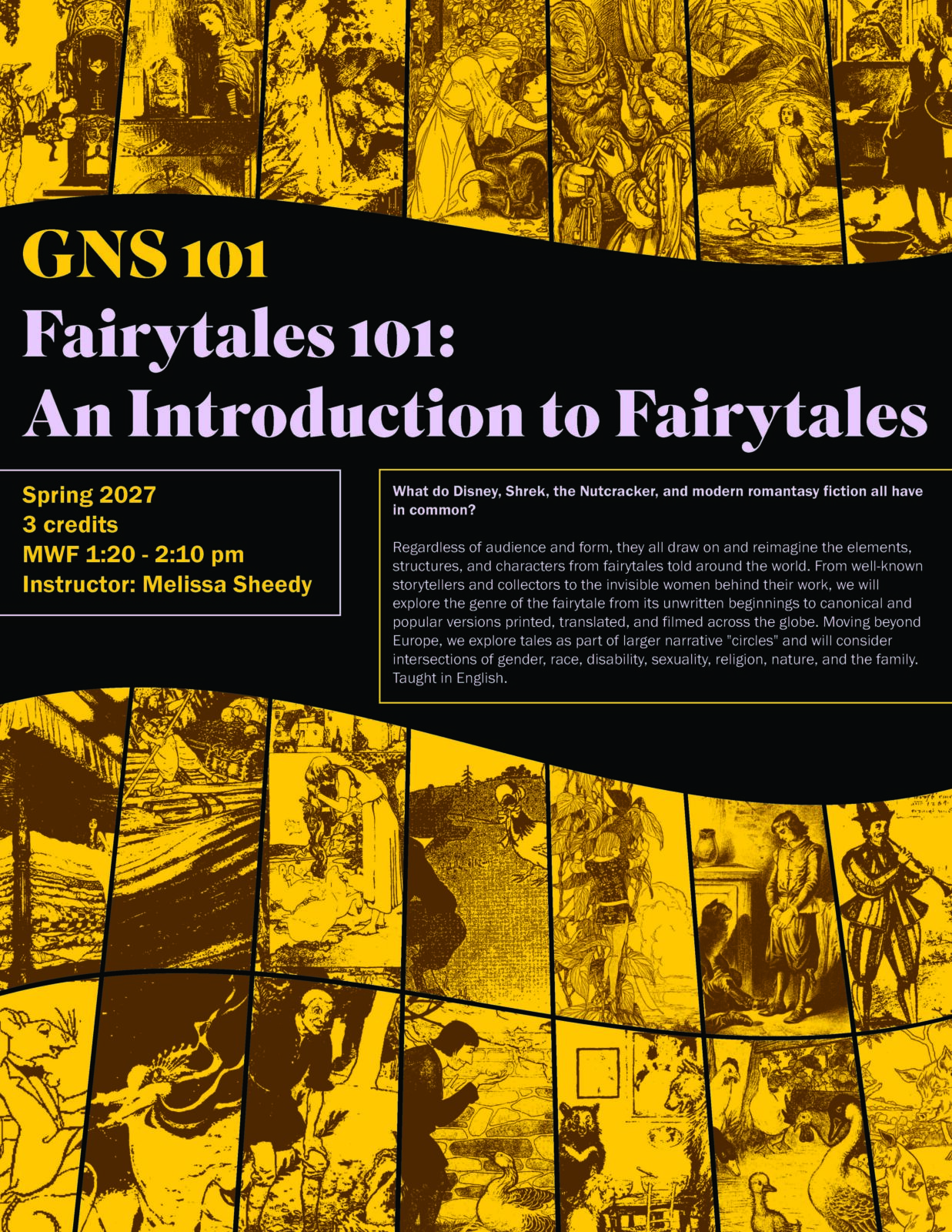
What do Disney, Shrek, the Nutcracker, and modern romantasy fiction all have in common? Regardless of audience and form, they all draw on and reimagine the elements, structures, and characters from fairy tales told around the world. We will consider how familiar formulas are reimagined across time, cultures, and media. We will explore tales as part of larger “circles,” groups of adaptations over time, to trace how sociocultural values embedded in these stories shift over the years. We will consider intersections of gender, race, disability, sexuality, religion, nature, and the family, and explore how these depictions are shaped by the national, cultural, and personal circumstance of their tellers and re-tellers.
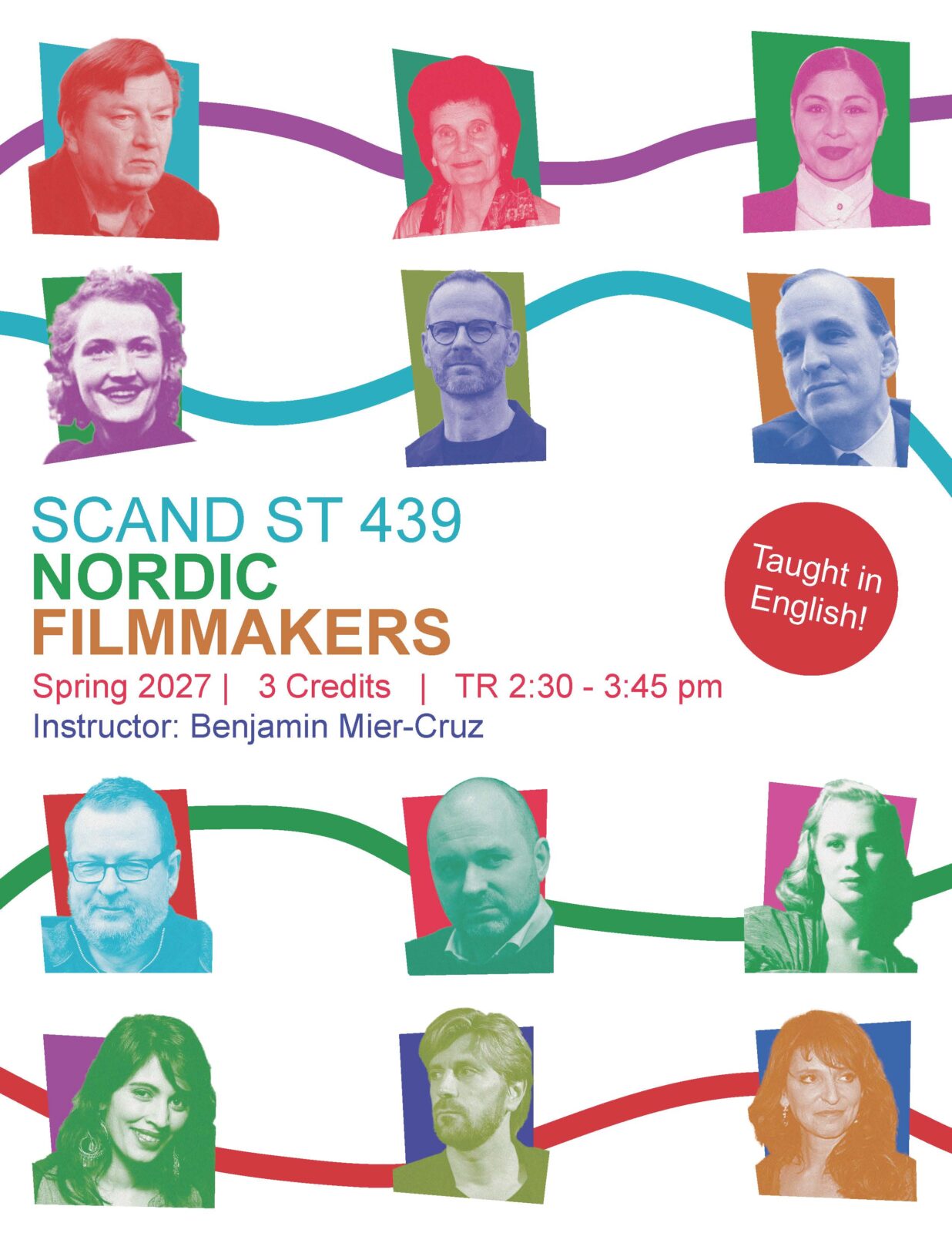
How do filmmakers use cinematic form to challenge social norms, expose power structures, and disrupt expectations of our place in the world? This course explores the diverse and landscape of Nordic cinema and how filmmakers from the region have pushed the boundaries of film through striking visual styles, unconventional narratives, dark humor, psychological intensity, and formal experimentation. From intimate character studies and existential dramas to social satire, feminist filmmaking, and explorations of identity and belonging, we will investigate how Nordic filmmakers represent and challenge the societies in which they work. We will consider how films engage with questions of gender, sexuality, race, class, morality, and social change, while paying close attention to the cinematic techniques.