
Department of German, Nordic, and Slavic+
Our Programs
Since its establishment in the 1850s, the German program at the University of Wisconsin–Madison has been one of the leading centers for German studies in North America. The program offers a wide variety of undergraduate and graduate courses on language, literature, culture, linguistics, and German-American studies.
Established in 1875, the Department of Scandinavian Studies at the University of Wisconsin-Madison is the oldest Scandinavian Studies department in the United States. Since its founding, the department has offered a variety of courses on literature, language/linguistics, culture, philology, and folklore, within the field of Scandinavian and Nordic.
The Slavic Program at the University of Wisconsin-Madison is one of the nation’s leading doctoral programs. Instruction in Slavic languages and literature at the University of Wisconsin-Madison traces its roots back to 1935, when state legislators and leaders of the Polish-American community demanded that the University begin to offer Polish.
One of the most prestigious Folklore Programs in the country, we have an international reputation for excellence. Our courses will prepare you to meaningfully engage with communities and organizations, take part in important dialogues about diversity, and explore creative practices and expressive culture.
Courses
Events
-
Hilldale Lecture: Defining Enlightenment: Kant, Mendelssohn, Arendt
What is Enlightenment? In 1783 Berlin monthly Berlinische Monatsschrift asked its readers to submit answers to this question, and both Immanuel Kant and Moses Mendelssohn sent essays to the journal. Their submissions, both published in 1784, offered very different responses. In 1933, shortly after Hitler’s rise to power, Hannah Arendt also reflected on Enlightenment. She would implicitly refer to Kant …
Recent GNS+ Award Recipients
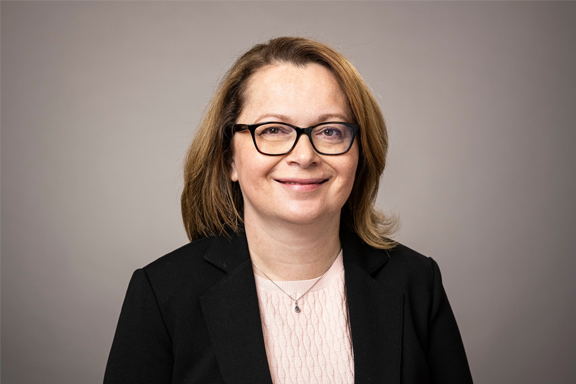
Anna Tumarkin (Spring 2026)
Anna Tumarkin is the recipient of the Mary Lucy Clark Distinguished Teaching Award.
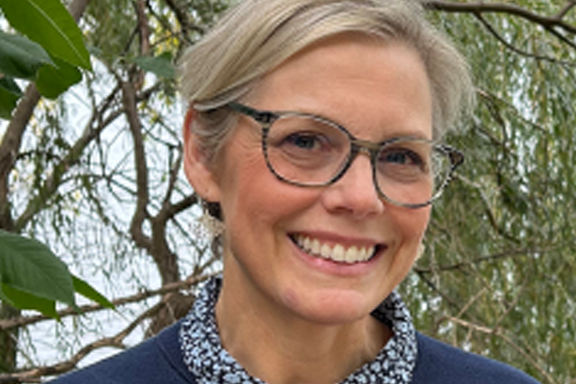
Jeanne Schueller (Spring 2026)
Jeanne Schueller is a recipient of the 2026 L&S Academic Staff Teaching Excellence Awards.

Congratulations, Spring 2026 GNS+ Graduates!
GRADUATE
German MA
Emerson McManus
Clara Vigener
Lowell Ruck
Scandinavian Studies MA
Nico Borbely
Drew Swasey
Berit Skogen
Slavic MA
Isabella Prenger
Anastasiia Loginova
UNDERGRADUATE MAJORS
German Major
Lillian Duffy
Emma Catherine Karpfinger
Anna-Sophie Caroline Linse
Maddux Lunde
Isabelle Lynn Marema
Florence Elle Robbins
Brooke Elizabeth Rodriguez
Max Schmidt
Ethan Michael Tusic
Vincent Wu
Scandinavian Studies Major
Sofia Diane Stutesman
Emily Mae Jensen
Niklas Lauridsen
Kathryn Agnes Stearns
Audrey Anna Wilson
Scandinavian Studies Major, LCNE Certificate
Eliana Sydney Sauer
Scandinavian Studies Major, Folklore Certificate
GraceAnne R. Doyle
Scandinavian Studies Major, Folklore Certificate, LCNE Certificate
Jenna Hillestad
Russian Major
David Ben Anderson
Robert Wayne Jacobson
Sydney Katherine Kurszewski
Katya Leek
Brendon Michael Peterson
Walter Clintton Smith
Polish Major
Elena Tomchek
UNDERGRADUATE CERTIFICATES
German Certificate
Anna Lytle Arthur
Andreas Baechler
Barrett Christopher Barger
Catherine Donohue
Joshua Kenneth Huck
Kat Kessler
Charles Toland Leigh
Megan Leiterman
Kaelyn Grace Makela
Erich Manter
Case Morton-Lill
Annika Mueller-Owens
CHARLOTTE SOPHIA Neumann
Blue Noeske
Alethea Michon Autumn Quick
Stella Jane Richards
Geoff Karl Saemann
Nicholas Patrick Schense
Jamie Ann Shaver
Nadia Anneliese Ulrike Sheeley
Charlie Struhs
Abigail Rose Thiel
Vinessa Verheyen
Lauren Sara Weber
Genevieve Weisensel
Benjamin Todd Wilson
Hope Julia Wooten
LCNE Certificate
Kari Amelia Hjelmeset
Paige P Schulz
Kate Stukel
Slavic Studies Certificate
Amar Melo Chhetri
Jessica Jyldyz Dreier
Isabella Krasotin
Alexandra Mikhailovna-Victoria Spies
Folklore Certificate
Jackson Connell Bussey
Henry Collins
Adam Christopher Daun
Emma M Fasano
Adam David Gerarden
Shayfer Isherwood Huitt
Abby Kislow
Heewone Lim
Elise Moreira
Nora Murphy
Sophia Myshchyshyn
Bailee Peterson
Livvy Schwarz
Junru Shi
Kiera Sokup
Aiman Syeda
Cesar Luis Velez Delgado
Xingyi Xuye
Department of German, Nordic, and Slavic+ Statements
The Department of German, Nordic, and Slavic+ strives to create inclusive excellence by valuing the contributions of people of diverse backgrounds based on their race, ethnicity, culture, veteran status, marital status, socio-economic level, national origin, religious belief, ability, gender identity, sexual orientation, age, and class.
This is an ongoing task that requires each of us to unlearn our socialization in cultures where privilege and opportunity are unequally distributed along many of those lines and then to put that learning into practice in our classrooms, syllabi, decision-making structures, and research.
Note: the vocabulary we use for identity is complex because identities are themselves complex. We use the terms Black and BIPOC (Black, Indigenous, and Person of Color) to reflect the multiple identities individuals may hold, and we use Hispanic/LatinX/Chican@ to reflect the broader use of the former term and the critique to it posed by the latter two.
The tumultuous year of 2020 has brought about a reckoning in virtually every sphere that shapes U.S.-American cultural and institutional life. As an academic community that is also part of a larger U.S.-American cultural and institutional fabric, we commit our voice and action to the social issues that are facing our faculty, staff, and students, as well as the people living in the United States. Our statement is a response to:
- the COVID-19 pandemic, which has underscored the racial inequities in health care and economic access for Black, Indigenous, and Hispanic/LatinX/Chican@ communities, triggered xenophobia and racism against Asians and Asian-Americans, as well as amplified anti-Semitism and Islamophobia;
- the latest chapters in a long history of police violence against Black people, which sparked protests for racial justice led by Black Lives Matter in the spring and summer of 2020;
- the xenophobic targeting of international students in repeated executive orders attacking their right to study and learn in the United States, which threatened thousands of students and scholars, and the university-internal discrimination against paying international students fair wages;
- the September 22 executive order forbidding the use of federal funding for any discussions or trainings on racism, gender discrimination or misogyny, which attempted to stifle the work to undo those injustices; and finally,
- the chaotic presidential election of November 2020, which underscored that voter suppression continues systematically to disenfranchise Black voters and other People of Color.
While the past year of 2020 has led us to focus on the urgency of anti-racist work in particular, we recognize the complex intersections of identity in the US and worldwide, which include not just race and ethnicity but gender identity, dis/ability, sexual orientation, and religious affiliation. We hold that our commitment to anti-racist work will also help us challenge misogyny, homophobia, transphobia, xenophobia—including anti-Semitism and Islamophobia—, and prejudices about ability and religion.
Thus, we, the Department of German, Nordic and Slavic+ commit to the following concrete actions in the next two years:
- We will mentor faculty in creating more inclusive syllabi that profoundly engage with race and its history.
- We will formulate concrete steps toward fostering greater anti-racist and decolonizing pedagogy in our department courses and curricula.
- We will invite lectures from Black and BIPOC scholars in our disciplines and promote those lectures.
- We will develop criteria for evaluation and recognition of work in diversity, equity, and inclusion for hiring, promotion, and nominations for achievement awards. We will, further, feature such recognition in our nomination materials, newsletters, annual reports, and tenure dossiers.
- We will pursue university funding (e.g., Target of Opportunity funding) to supplement departmental funds for hiring Black and BIPOC scholars and supporting them once hired.
- We will prepare a grant application to UW–Madison’s Division of Diversity, Equity, and Educational Achievement to match departmental funds for scholarships and support programs for Black and BIPOC students, especially current or potential PhD students.
- We will use departmental meeting and other committee time for all GNS+ workers to undertake individual development, self-reflection, and scholarship, such as study groups on particular texts, hiring Black and BIPOC experts in racial justice training, or internal UW–Madison courses or trainings.
- We will create an application process for funding for faculty, staff, and graduate students to pursue trainings in racial and social justice on the UW–Madison campus and elsewhere.
We once again remind ourselves and our colleagues that each of us shares the responsibility to advance anti-racism and social justice.
Black Lives Matter.